

Data-Driven Sustainment: Leveraging Big Data and Predictive Analytics for Army Supply Chain Resilience
Category: Lessons Learned
Honorable Mention
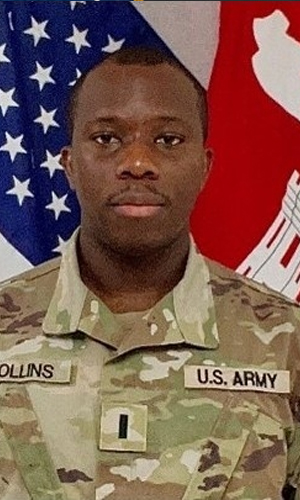
by 1st Lt. Ashley “Ash” Collins
Introduction
Supply chains today aren’t just behind the scenes process; they’re becoming battlegrounds in their own right. The Army has always relied on solid logistics; “Logistics wins wars,” quoted by U.S. Army Gen. John J. Pershing. However, recent events like the COVID-19 pandemic and the war in Ukraine have shown just how vulnerable even the most advanced systems can be. These crises showed some uncomfortable truths: Just-in-time supply models can fail under pressure, depending on a single source for critical parts is risky, and long supply lines are easy targets in contested environments.
As the Army embarks on its biggest modernization (Executive Order 14265) in decades, we can’t keep reacting after problems arise. We need to anticipate challenges, adapt quickly and build resilience right into our sustainment systems. That’s where big data and predictive analytics come in. Paired with smarter contracting and industry partnerships, these tools can help us move from firefighting to foresight.
Lessons from COVID-19 and Ukraine: Fragility in Focus
The COVID-19 pandemic was a real test of our global supply chains. Even basic supplies became scarce to secure like medical supplies, personal protective equipment and raw materials (micro-chips, steel and other minerals). For the Army, that meant waiting longer for repair parts, competing with civilian markets for microchips and struggling to find key raw materials like steel and rare earth minerals.
The war in Ukraine reinforced these lessons on a military scale. Russia placed immense strain on Ukrainian and allied sustainment systems; the invasion turned supply lines into prime targets. Ammunition shortages, fuel distribution challenges and the difficulty of maintaining heavy equipment in the field have all emphasized the need for diversified sourcing, surge capacity and real-time visibility into logistics operations.
For the Army, these crises are more than case studies; they are warnings. In a future large-scale combat operation, sustainment will be targeted directly, and fragile supply chains will quickly become a critical vulnerability unless resilience is deliberately built into the system.
Harnessing Big Data and Predictive Analytics
The Army already possesses a wealth of sustainment data, but much of it is underutilized. Platforms like the Global Combat Support System – Army (GCSS-Army) collect maintenance, supply and financial data from across the force. The Army Vantage platform integrates multiple data sources, providing commanders with visibility into readiness, logistics and personnel trends. At the Department of War level, Advana serves as an enterprise analytics platform, aggregating data across the services. Together, these systems create the foundation for a data-driven sustainment enterprise.
The next step is to apply predictive analytics and machine learning (ML) to these datasets to anticipate problems before they occur. Programs such as Condition-Based Maintenance Plus (CBM+) are leading the way by integrating sensor data from vehicles, aircraft and weapon systems to forecast failures. Rather than waiting for equipment to break, sustainers can identify parts nearing failure and replace them during scheduled downtime. This reduces costs, increases operational availability and ensures that critical systems remain mission ready. Examples include:
- Predictive maintenance: ML algorithms applied to GCSS-Army data can forecast demand for high-failure items such as transmissions, hydraulics or electronics. This is separate from already identified items like long lead or bench stock. This allows the Army to pre-position parts at depots or forward locations, reducing downtime.
- Dynamic forecasting: Predictive analytics can improve demand models for Classes III (fuel), V (ammunition) and IX (repair parts). Instead of relying on static consumption rates, planners and maintainers can adjust based on real-time operational use.
- Additive manufacturing (AM): Big data can identify recurring supply bottlenecks and enable targeted investment in 3D printing solutions. By printing critical repair parts at the point of need, units can bypass traditional supply chains and maintain combat power. (Example: rifle component, such as thelower receiver of an AR-15)
Commercial examples already demonstrate the art of the possible. Airlines, such as Delta and UPS, use predictive maintenance to avoid costly downtime. Automotive manufacturers leverage real-time analytics to forecast demand across global supply chains; the Army must adopt similar practices.
Contracting Innovation for FUOPS (Future Operations)
Data-driven sustainment will not succeed without hand in hand involvement with acquisition and contracting. Traditional contracts often emphasize cost efficiency and delivery timelines, but they don’t always incentivize readiness or resilience. To modernize sustainment, the Army must re-think how it partners with industry. Key innovations include:
- Performance-based logistics (PBL): PBL contracts tie payment to outcomes such as equipment availability or mission-capable rates, rather than simply delivering parts. This incentivizes industry to invest in predictive analytics.
- Data-sharing clauses: Modern sustainment requires visibility into diagnostic and performance data. Contracts should mandate that original equipment manufacturers share sensor and usage data with the Army, enabling integrated predictive analytics across the force.
- Surge and flex contracts: Future conflicts will require the ability to scale production rapidly. Contracts must include provisions for surge manufacturing, alternate sourcing and flexible delivery options to account for contested logistics.
By embedding these provisions into acquisition strategies, the Army can ensure that industry partnerships strengthen resilience rather than reinforce fragility for future engagements and operations.
Challenges and Guardrails
As we highlight possible capabilities that could go well to improve future Army operations, we must also manage risks and trade-offs:
- Cybersecurity: As logistics systems become more connected and reliant on data, the attack surface expands. Adversaries may target supply chain data to disrupt operations, steal sensitive information or inject false signals into predictive models. Cybersecurity must be built into every system and contract.
- Data quality: Predictive analytics is only as good as the data it relies on. Incomplete, outdated or biased datasets can produce flawed predictions. The Army must invest in data governance, standardization and verification to ensure accuracy.
- Algorithmic bias: ML models may inadvertently encode assumptions that skew predictions. For example, over-reliance on historical usage patterns may fail to account for new equipment or novel operational conditions. Human oversight and continuous model testing are essential.
Conclusion
The Army’s ability to sustain operations has always been its competitive advantage, however, recent events like COVID-19 and Ukraine demonstrates that traditional supply models are insufficient in today’s competitive environments. By harnessing big data, predictive analytics and additive manufacturing, the Army can anticipate demand, failures and build a more agile sustainment enterprise.
At the same time, acquisition and contracting practices must evolve to keep up with current capability changes. Performance-based logistics, data-sharing clauses and surge contracts can align industry incentives with Army readiness. These changes will require cultural shifts, policy updates and sustained investment, but the cost of inaction is far higher. By embracing data-driven sustainment now, the Army can ensure that logistics remains a source of strength rather than vulnerability in future conflicts.
1ST LT. ASHLEY “ASH” COLLINS is a logistics manager with over a decade of combined military and federal service experience. He currently serves as the Installation Protection Program (IPP) team lead at TACOM, Detroit Arsenal, where he directs multiple Department of War platforms supporting mass notification, emergency communications and situational awareness across Army installations. He serves in the Michigan Army National Guard, where he brings expertise in logistics and sustainment operations.
Legal Disclaimer:
EIN Presswire provides this news content "as is" without warranty of any kind. We do not accept any responsibility or liability for the accuracy, content, images, videos, licenses, completeness, legality, or reliability of the information contained in this article. If you have any complaints or copyright issues related to this article, kindly contact the author above.
